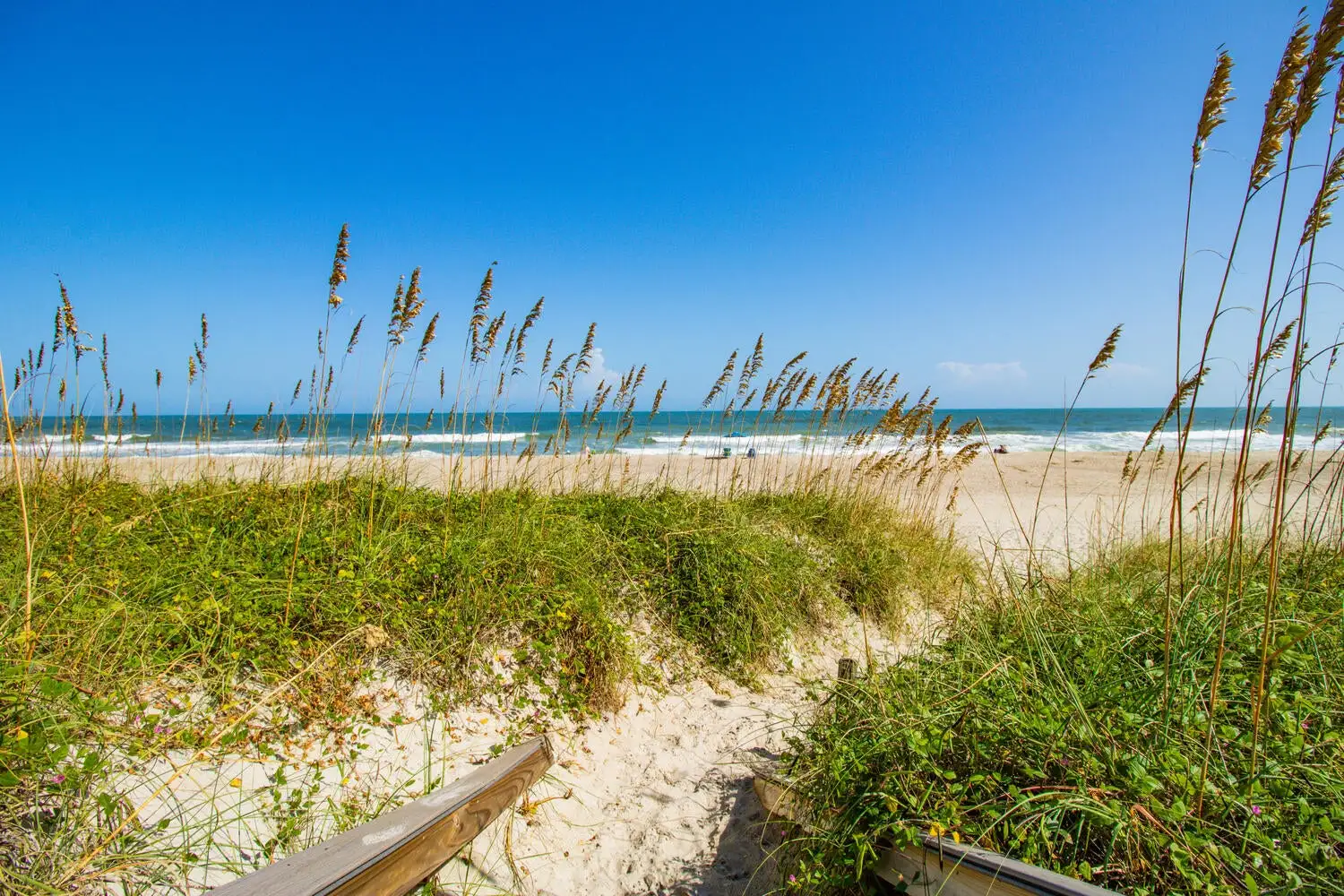
Recently named the 2025 North Carolina Visitor Attraction of the Year, Fort Fisher State Historic Site draws more than a million visitors annually. There's plenty to keep you busy, from Civil War landmarks and scenic walking trails to museums and nearby beaches.
Beach days don't usually come with underground tunnels, Civil War battlefields, towering earthen fortifications, or stories that helped change the course of American history. At Fort Fisher, they do. Just a short drive from Kure Beach and Carolina Beach, this must-visit historic site gives you the chance to experience one of North Carolina's most important landmarks, set against some of the state's most beautiful coastal scenery.
In this blog post, I'll be your guide through the history behind Fort Fisher and all the things you and your vacation crew can enjoy when visiting this historic gem just a few minutes from your accommodation in Kure Beach or Carolina Beach.
A quick word from us:
At Carolina Beach Realty, we specialize in vacation rentals in the heart of Pleasure Island. Family-owned and locally operated since 1963, we've spent over 50 years helping guests discover the best of North Carolina's coast.
Our destination blog is filled with insider tips on where to eat, must-visit spots, and year-round events, because we love sharing the hidden gems that make this part of North Carolina so special!
The History Behind Fort Fisher
Fort Fisher played a pivotal role in the final months of the American Civil War. Located where the Cape Fear River meets the Atlantic Ocean, it protected the port of Wilmington, the Confederacy's last major supply route. Nicknamed the "Gibraltar of the South," the fort allowed blockade runners to deliver food, clothing, medicine, and ammunition that kept the Southern war effort alive. Confederate General Robert E. Lee famously admitted that losing Fort Fisher would make it impossible to sustain his army.
Unlike traditional forts built from brick or stone, Fort Fisher was constructed almost entirely from earth and sand. Designed to absorb artillery fire rather than crumble under it, it eventually grew into the largest sand fortification in the world. At its peak, the complex stretched for more than a mile and featured towering defensive mounds built largely by hand by Confederate soldiers, enslaved workers, free African Americans, and members of the Lumbee Tribe.
After a failed Union assault in December 1864, more than 8,000 troops returned the following month for what was then the largest amphibious assault in U.S. history. The fort fell on January 15, 1865, cutting off the Confederacy's final major supply line. Wilmington surrendered soon afterward, and the Civil War ended just a few months later.
Today, only about 10% of the original Fort Fisher remains. The vast majority of the fort has been lost to more than a century of coastal erosion. What you'll see today is a combination of original remnants and carefully reconstructed sections designed to give visitors a better sense of the fort's original scale.
How to Enjoy Fort Fisher Historic Site
1. Start at the New Visitor Center
Before heading outside, spend some time inside Fort Fisher's impressive visitor center. Opened in late 2024, the new 20,000-square-foot facility was designed to accommodate the site's growing popularity and presenting its history in a far more engaging way than ever before.
The permanent "Through Their Eyes" exhibition traces centuries of regional history, introducing visitors to Indigenous communities, early settlers, enslaved workers, Confederate soldiers, Union troops, the United States Colored Troops, and even the military presence that returned during World War II. Instead of focusing solely on battles and generals, the exhibits emphasize the people whose lives intersected with this stunning stretch of coastline.
The museum also houses weapons, uniforms, medical equipment, personal belongings, and artifacts recovered from Confederate blockade runners that once slipped through Union naval patrols. Before heading outdoors, watch the 10-minute orientation film for an excellent overview of the fort's strategic importance and the role it played during the Civil War.
2. Explore the Fortifications
Although coastal erosion has claimed roughly 90 percent of the original fort over the past century, the surviving earthworks still leave a lasting impression.
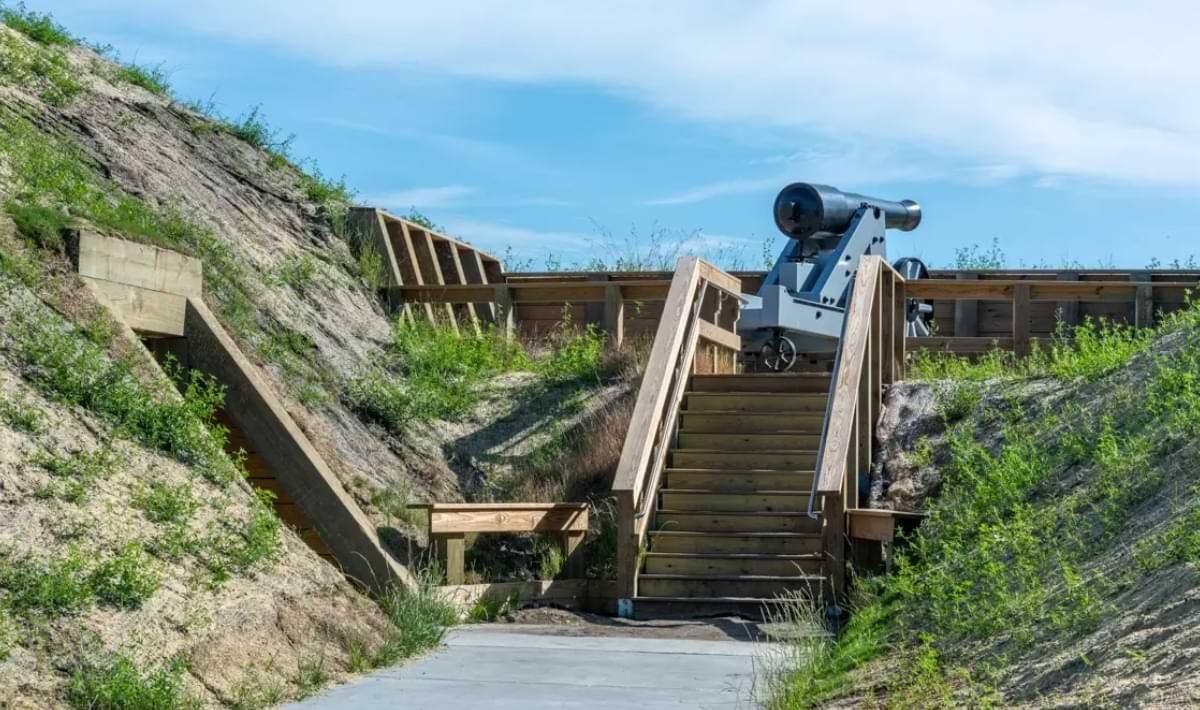
The accessible half-mile Tour Trail winds around the preserved land face of the fort beneath sprawling live oaks. Along the way, interpretive panels explain how these massive earthen defenses protected Wilmington and why Fort Fisher proved so difficult to capture.
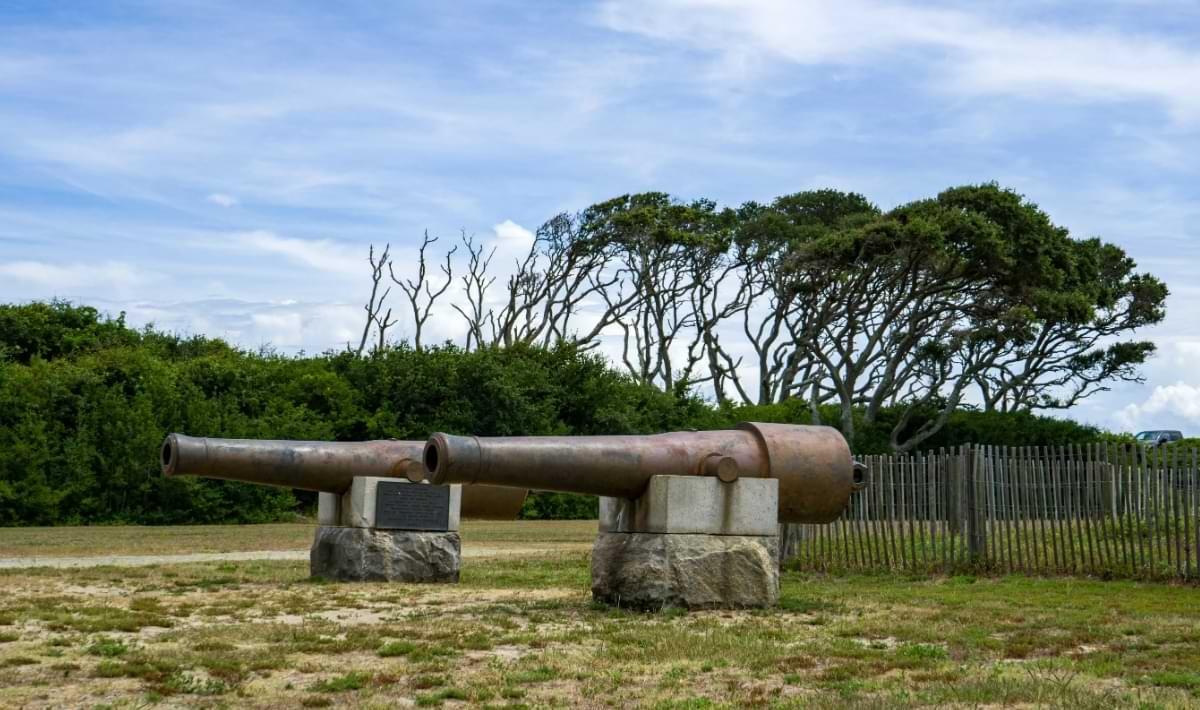
One of the highlights is Shepherd's Battery, where a reconstructed 32-pounder seacoast cannon offers a striking sense of the artillery once stationed here. Recent enhancements have also opened an underground ammunition magazine, allowing visitors to walk through restored tunnel spaces before emerging beside reconstructed cannon positions.
3. Join a Guided Tour
Exploring the grounds on your own is great, but guided tours provide a much deeper understanding of the site.
Standard ranger-led walks explain how the fort operated during wartime, and the popular Above the Scenes Tour takes you to the tops of the massive earthen traverses for panoramic views across the Cape Fear River, the Atlantic Ocean, and the remaining fortifications. Some programs even include Civil War artillery demonstrations.
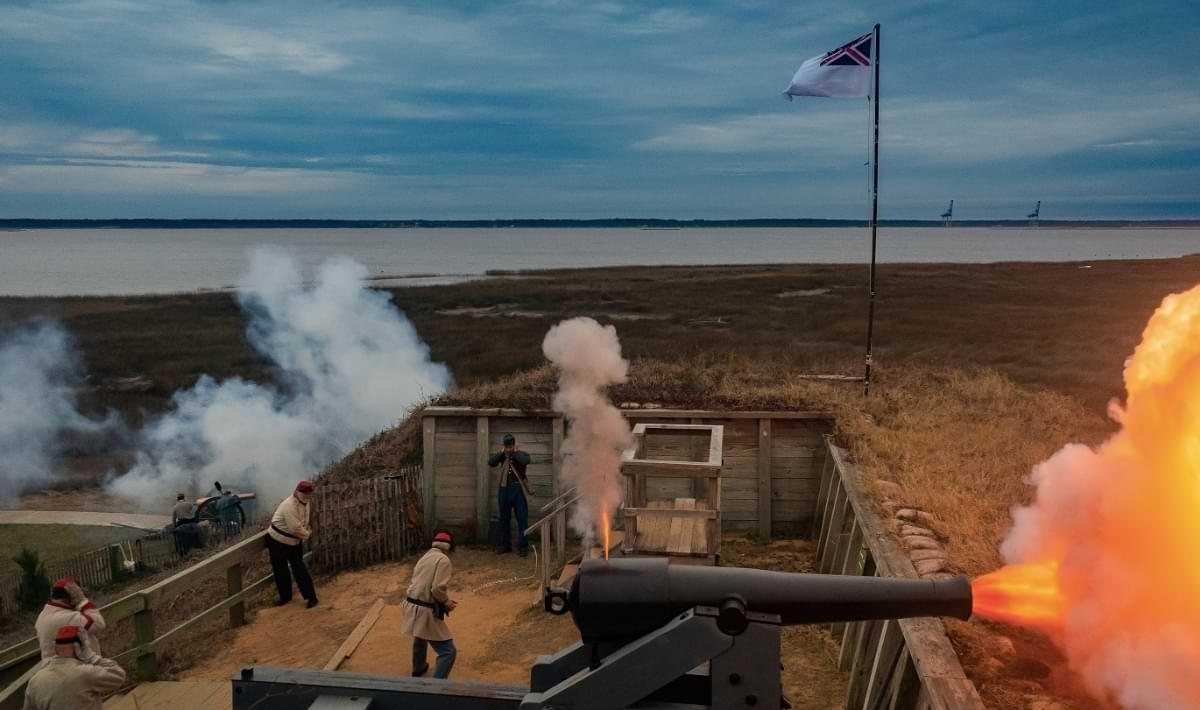
Throughout the year, Fort Fisher also hosts living history events, including cannon firings, infantry demonstrations, and battle commemorations marking the anniversary of the fort's capture. During major reenactment years, hundreds of participants return the battlefield to life in extraordinary detail.
How to Enjoy Beyond Fort Fisher Historic Site
Within just a few minutes of the fort, you'll find undeveloped beaches, scenic hiking trails, an excellent aquarium, and even a ferry ride across the Cape Fear River. All of these attractions are worth planning around so you can make the most of your day trip and experience the many sides of Fort Fisher.
Visit Fort Fisher State Recreation Area
Just south of the historic site lies one of the most beautiful stretches of coastline in southeastern North Carolina.
Fort Fisher State Recreation Area protects six miles of largely undeveloped beach, offering a less busy alternative to the shores farther north. It's an excellent place to go for a walk, collect shells, or simply relax after spending the morning learning about the fort.
At low tide, keep an eye out for ancient coquina rock formations that date back thousands of years. If you have a permit and a four-wheel-drive vehicle, you'll also find one of the area's few beaches where driving on the sand is permitted.
Walk the Basin Trail
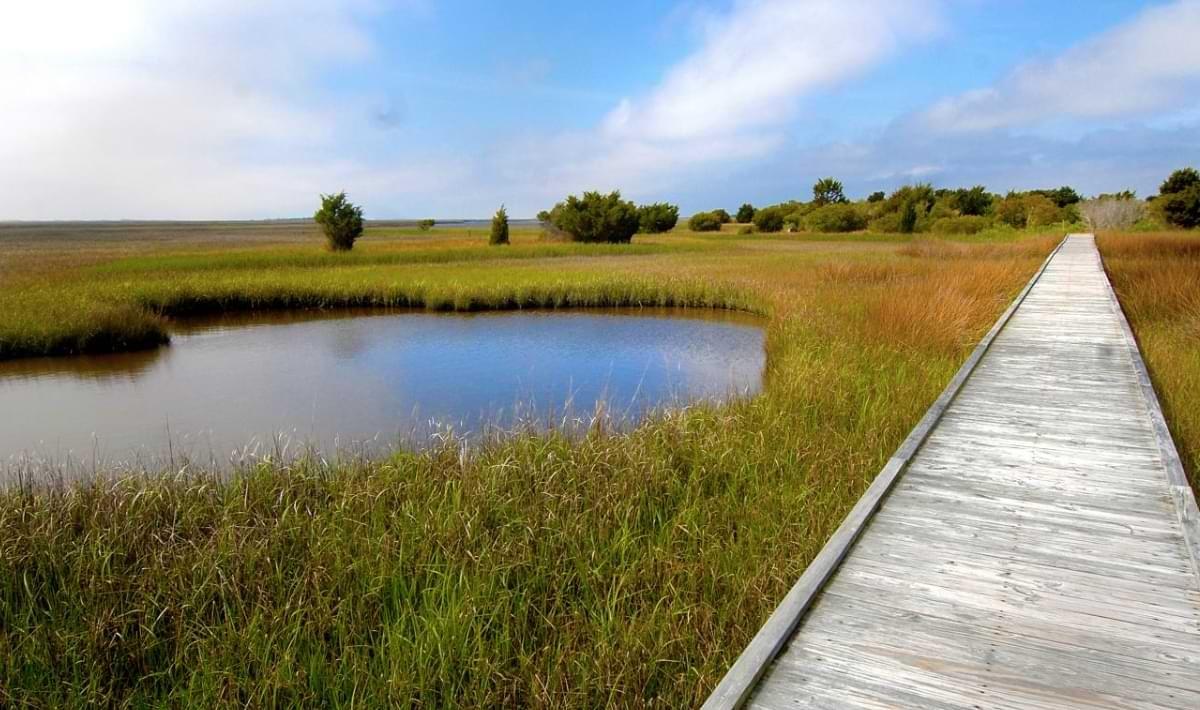
The 1.1-mile Basin Trail winds through maritime forest and salt marsh before reaching an observation deck overlooking the Cape Fear River.
The trail also leads to one of the area's most unusual landmarks: an abandoned World War II ammunition bunker that later became home to Robert Harrell, better known as the Fort Fisher Hermit. Harrell lived here from 1956 until 1972, surviving almost entirely off the land and sea. 7.
Visit the North Carolina Aquarium at Fort Fisher
Less than a mile from the historic site sits another favorite attraction, especially for families.
The North Carolina Aquarium is home to marine life from across the region through freshwater and saltwater exhibits featuring sharks, stingrays, playful otters, and even a resident albino alligator. Younger visitors usually make a beeline for the popular touch tank, where they can interact with sea stars, horseshoe crabs, and other coastal creatures.
Ride the Southport–Fort Fisher Ferry
If you still have time after exploring the peninsula, consider boarding the Southport–Fort Fisher Ferry.
The scenic 25-minute crossing carries passengers and vehicles across the Cape Fear River to the charming town of Southport. Along the way, you'll enjoy stunning views of marshes, estuaries, and the surrounding barrier islands, with captivating dolphins occasionally making an appearance.
Even if you don't plan to spend much time in Southport, the ferry ride itself is well worth it.
Don't Miss Battery Buchanan
Near the ferry terminal sit the partial remains of Battery Buchanan, where Confederate troops made their final stand during the Battle of Fort Fisher. Although little is left, it's a meaningful stop for anyone interested in seeing how the battle came to an end.
Practical Information & Tips for Visiting Fort Fisher
- Admission to both the historic site and the visitor center is completely free.
- Comfortable walking shoes are a good idea, as several paths include sand or uneven ground.
- Summer mornings are usually the most comfortable time to visit, with cooler temperatures and fewer people on the trails.
- If you're interested in the Above the Scenes Tour, call ahead before arriving since guided tour availability depends on staffing and weather.
- There are no picnic facilities inside the historic site itself, but you'll find picnic areas nearby at Fort Fisher State Recreation Area. Alternatively, head back to Kure Beach for lunch at local favorites like Freddie's Restaurant or Jack Mackerel's Island Grill, or stop by Happy Hippies Java Hut for a coffee before starting your day.
Ready to Experience Pleasure Island Like a Local?
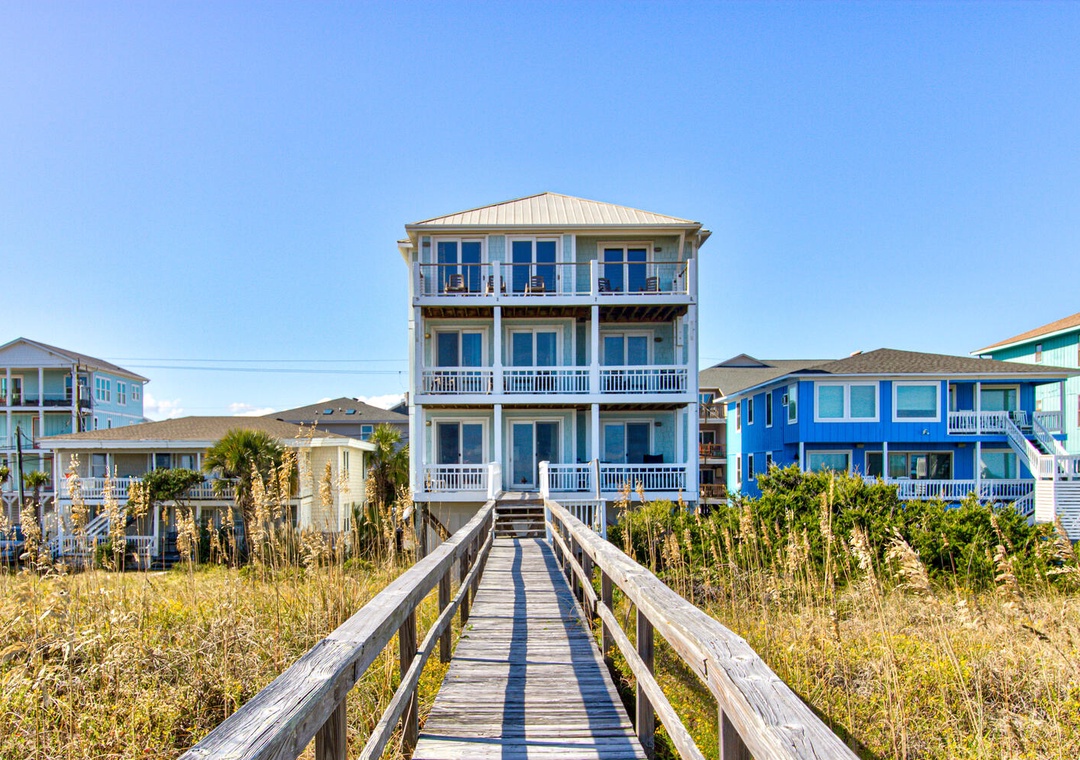
At Carolina Beach Realty, we offer a curated selection of vacation rentals across North Carolina's coast: from classic beach cottages to spacious oceanfront homes. With over 50 years of local experience, we take pride in delivering personal service, exceptional comfort, and that unmistakable Carolina hospitality.